
Water warmth
/
Water warmth
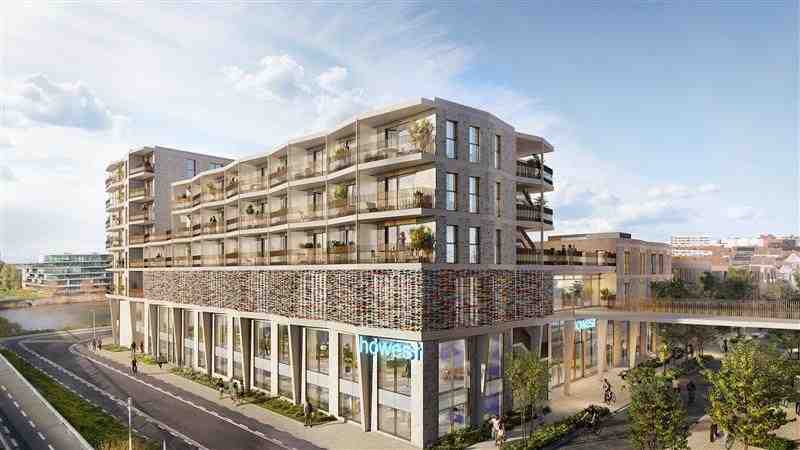
This project examines the potential of using the Leie as a heat source to heat future buildings of Howest and the city of Kortrijk in the smartest and most energy-efficient way possible. The goal of Waterwarmth is to combine knowledge, thinking power, and organizational strength, spread across the North Sea region, to collectively overcome the challenges of energy transition and accelerate a socially just transition to carbon-free heating and cooling. This will be achieved by highlighting the untapped potential of aquathermy, demonstrating the implementation of aquathermy systems that can alleviate network congestion by providing flexibility and operating outside the central network. Replicable examples of the development of large-scale aquathermy systems and management structures will be made widely available in a roadmap for energy communities. A European network for aquathermy will be established that will initiate many project developments in the North Sea region.
Main section
Quick facts
/
Interreg NSR
/
Location: Kortrijk
/
Start: June 2023
/
Duration: 3 years
What is the goal of this project?
Replicable examples of the development of large-scale aquathermal systems and management structures will be made generally available in a roadmap for energy communities. A European network for aquathermy will be established that will initiate many project developments in the North Sea region.
What is Howest's role in this project?
Howest is involved in two work packages. The first is related tothe development of a replicable pilot locationThe chosen location for the installation of aquathermal energy is Havenkaai. The location will utilize geothermal energy to heat and cool the buildings and aquathermal energy to meet the heating demand and extend the lifespan of the geothermal field.
Watch the video if you are interested in the principle of combining aquathermal and geothermal energy!
- In spring and autumn, water is taken from the Leie and used directly for heating. The temperature of the water is pumped up with a heat pump, and the buildings are heated via underfloor heating. During these seasons, the river alone should be sufficient to meet the heating demand.
- In winter, when the temperature of the river water is too low, no aquathermal energy is used, and only heating is provided from the geothermal field.
- In the summer, finally, aquathermal energy unfolds its full potential. Water from the river is pumped and used to regenerate (increase) the temperature of the ground in the geothermal field. The field acts as a thermal battery in which the heat from the river is stored to be used later when the heating demand of the buildings is high.
In the second work package isa modeling tooldeveloped to assess the viability of district heating networks. The tool searches for the most cost-optimal operating cycles for your personalized heat network, taking into account the available production resources and the heat needs of the prosumers.
Discover the modeling tool here and contact us for access and more information:https://waterwarmth.trikthom.com/
Bottom section
Sponsors

Contributors
Researchers
/
Monika Krasteva, Teamleider - Onderzoeker
Want to know more about our team?
Visit the team page